What questions should I ask
a web designer before hiring?
Every vendor has a smooth answer ready, until you ask what happens if you want to leave. Here are 12 questions, with the answer to listen for and the reply that ends the call.
The short answer
Ask about control before you ask about design
Ask who will own the domain, files and logins, who actually builds the site, what the price covers, what counts as a change request, how you edit it yourself and what happens if you leave. A good designer answers each one plainly and in writing; a vague or irritated answer tells you more than the portfolio does.
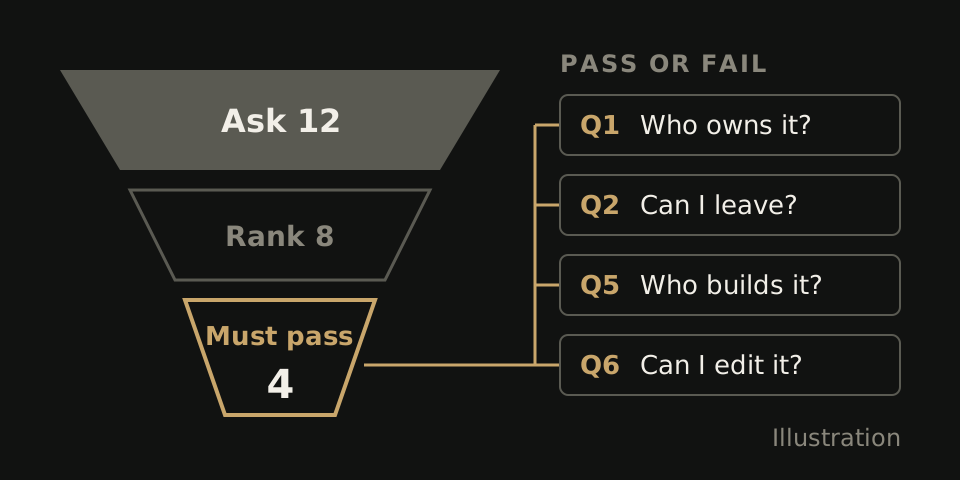
Below are 12 questions in three parts. Four of them are pass or fail.
Run the call like an interview, not a pitch
Let the designer ask about your business first. Then work through these in order and write each answer down in their words.
Four questions are pass or fail. If any of these gets a weak answer, stop comparing prices:
- Who owns the domain, the files and the logins?
- What happens if I want to leave?
- Who actually designs and builds it?
- Can I see the live edit screen?
The other eight sort a good fit from a fair one. Afterward, line up two proposals with the website quote comparison worksheet.
Part 1: Ownership and contract
1. Who owns the domain, the files and the logins?
Good answer: “You do.” The domain is in your name and you hold admin access to hosting, analytics and the site. Licensed photos or fonts you can’t keep are named in writing.
Walk away if: the domain sits in their account “to keep things simple,” or ownership depends on staying on their monthly plan.
Check it yourself: Log in to your domain registrar. If the domain is not in an account you control, fix that first.
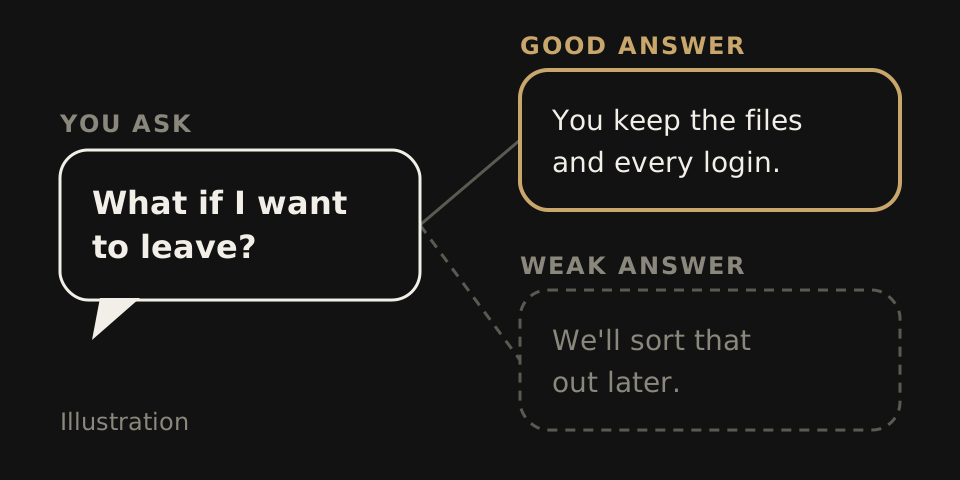
2. What happens if I want to leave?
Good answer: A list of what leaves with you: the files, the written content and every login, plus any platform limits on moving them.
Walk away if: they laugh it off, change the subject or hint at a transfer fee with no number.
3. What does the price cover, and is it one number?
Good answer: One price for an agreed scope: page types, copywriting, booking setup, content moved from the old site and testing. Anything left out is listed by name.
Walk away if: the quote is a page count and a total, or an “estimate” that firms up after the deposit.
4. What counts as a change request?
Good answer: A written rule. Anything that misses the agreed scope is theirs to fix. A page or feature you add midway is a change, priced before work starts.
Walk away if: “We’ll figure it out as we go.” That is how a flat quote turns into an hourly bill.
Part 2: The work
5. Who actually designs and builds it?
Good answer: Names. Who leads, who designs, who writes the code, and a chance to meet the lead before you sign.
Walk away if: the salesperson vanishes after the deposit and you get “the team” and a ticket number.
6. Can I see the live edit screen?
Good answer: They log in to a site they built while you watch and change an office hour or swap a photo in minutes. Ask what your front desk can edit alone.
Walk away if: you only ever see the finished site, or every text change has to be emailed to them.
7. Can you show me a site like mine, on my phone?
Good answer: A live site that does a similar job, opened on your phone, plus what they did on it: full build or one page. For a dental practice, that means a real booking path.
Check it yourself: On your phone, tap from the homepage to a sent booking request, then ask which of those steps they built.
A hypothetical: A designer shows a polished clinic site, then admits they built the homepage while the booking widget and forms came from the clinic’s software vendor. Honest, but not proof they can build your booking path. Ask for a second example.
Walk away if: the portfolio is screenshots only, or the live links look nothing like the screenshots.
8. How do you protect the search traffic my current site gets?
Good answer: A list of your current URLs, a redirect for every page worth keeping and a named person who checks them at launch. See our redesign SEO checklist.
Walk away if: “Search engines will sort it out.”
9. How will you prove the booking button works before launch?
Good answer: Test requests sent from real phones, each one shown landing with the right person at the right office.
Walk away if: testing means “we clicked it once on a laptop.”
Part 3: After launch
10. Do I have to pay you every month?
Good answer: Build and ongoing costs are separate lines, and any optional support can be declined.
Walk away if: the monthly fee is the only way to keep the site online, or it quietly pays off the build. See monthly vs one-time.
Check it yourself: Ask the yearly cost to keep the site online with no support: hosting, domain and paid plugins, and who bills each.
11. If something breaks after launch, who do I contact?
Good answer: A named person, a stated window for fixing launch defects and a written split between a bug (their cost) and new work (yours).
Walk away if: support is “just email us” with no name and no window.
12. What do I get on launch day?
Good answer: Every login in your name, a short editing guide, and a list of the outside tools the site needs and who pays for each.
Walk away if: launch day ends with “the site is live” and nothing in your hands.
Print this and take it to the call
Questions 1, 2, 5 and 6 are pass or fail. Ask those first if time is short.
| # | Question |
|---|---|
| 1 | Who owns the domain, the files and the logins? |
| 2 | What happens if I want to leave? |
| 3 | What does the price cover, and is it one number? |
| 4 | What counts as a change request? |
| 5 | Who actually designs and builds it? |
| 6 | Can I see the live edit screen? |
| 7 | Can you show me a site like mine, on my phone? |
| 8 | How do you protect the search traffic my current site gets? |
| 9 | How will you prove the booking button works before launch? |
| 10 | Do I have to pay you every month? |
| 11 | If something breaks after launch, who do I contact? |
| 12 | What do I get on launch day? |
Put us through the same twelve
Founder Ray Hussain leads every WTM Studio project; see our about page. You own what we build, there is no required retainer, and you see a free homepage concept then one flat quote. Redesigns typically run $6,000 to $30,000 one time; see our pricing page. Most sites launch in 2 to 4 weeks after the design direction is approved. Ask us all twelve.