How do I rank on Google
as a dentist or med spa?
If your practice shows up when someone searches its name but not when they search dental implants or lip filler, the gap sits in three layers. Here is what each one needs and a 90 day plan to fix them in order.
The short answer
Three layers, fixed in order
To rank on Google as a dentist or med spa, fix three layers in this order: your Google Business Profile, then one website page per treatment, then reviews and links from other sites. The order matters because an implant page cannot rescue a profile filed under the wrong category, and new reviews do little for a site with no page for the treatment people search.
Google says local results are based mainly on relevance, distance and prominence. You cannot move your office closer to every searcher, so the work goes into relevance and prominence. Google also says there is no way to request or pay for a better local ranking, so nobody, us included, can promise you a position. Read Google's own explanation of local ranking.
WTM Studio builds the second layer: custom dental websites and med spa websites with one page per treatment. Founder Ray Hussain leads every project.
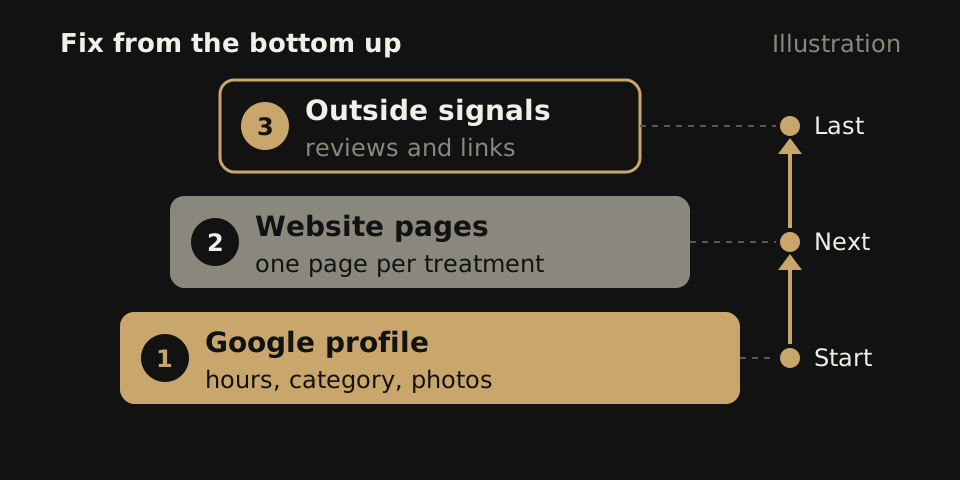
Layer 1: your Google Business Profile
The profile is your listing in the map results. Verify it, then fill in every field so it matches what a patient finds at your door. Google names address, hours, category and attributes as fields to complete, and tells owners to add photos and respond to reviews.
| Field | Dental practice | Med spa |
|---|---|---|
| Category | The one that names most of your work, such as dentist or cosmetic dentist. Add others only for care you provide every week. | Medical spa, not salon or day spa, so you match searches for clinical treatments. |
| Services | Implants, crowns, clear aligners, emergency visits, each listed in patients' words. | Injectables, fillers, laser hair removal, microneedling, each listed by its plain name. |
| Hours | Early and late days, and holiday closures entered in advance. | Evening and weekend hours, plus the days that are consult only. |
| Photos | The building from the street, the parking entrance, the front desk and a treatment room. | Treatment rooms and the entrance. No patient result photos without written consent. |
| Review replies | Short and specific. Never confirm the reviewer is a patient. | Never name the treatment someone had. Every reply is public. |
Layer 2: one page for each thing you treat
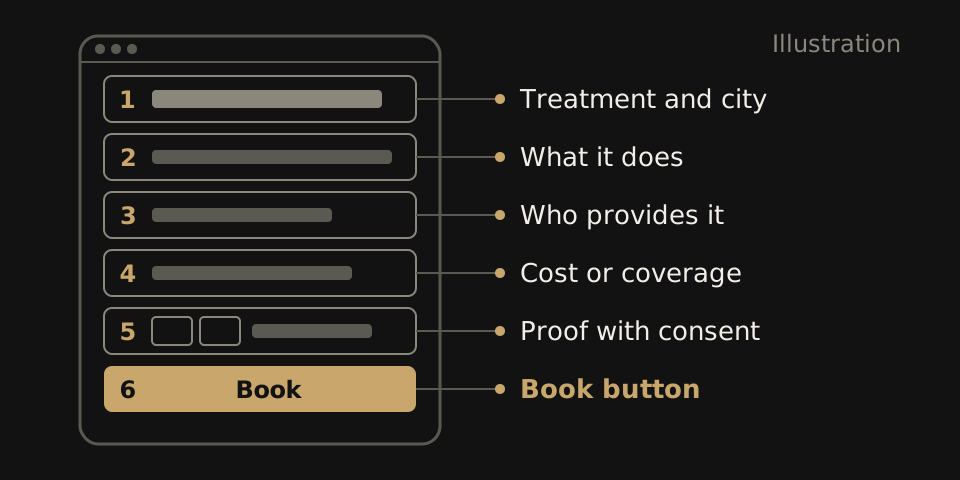
A Services page that lists eight treatments in one paragraph gives someone searching for dental implants or lip filler nothing to land on, and gives Google no single page to show them. Each treatment needs its own page that names the treatment in the heading, answers the questions patients ask at the front desk and ends with a book button.
| Page | Dental practice | Med spa |
|---|---|---|
| Treatments | One page each: implants, crowns, aligners, whitening, emergency care, children's visits. | One page each: neuromodulators, fillers, laser hair removal, microneedling, peels. |
| People | One page per dentist: real photo, training, the treatments they provide. | One page per provider: name, credentials, the treatments that person performs. |
| Cost questions | An insurance page listing accepted plans, or the number to call if the list changes often. | A membership page: what it includes, the monthly price and how to cancel. |
| Proof | Reviews quoted with permission, next to the treatment they mention. | Before and after photos only with the patient's written consent, labelled with the treatment and provider. |
| Locations | One page per office with its address, hours and booking. | One page per clinic, listing which treatments that clinic offers. |
Check it yourself: search one treatment and your town, then see which of your pages appears. If it is the homepage or the Services page, that treatment has no page of its own yet. Picture a hypothetical office that lists implants, aligners, whitening and emergency care in one paragraph. Four separate pages give each of those searches somewhere to land.
Layer 3: reviews and links from other people
Prominence is the layer other people hand you. Google says it reflects your review count and rating, along with links to your site from other websites. Both grow slowly, and buying either one backfires.
| Signal | Dental practice | Med spa |
|---|---|---|
| Reviews | Ask at checkout after a finished treatment and text the review link the same day. | Ask at the follow-up visit, once the result shows, not on the day of the injection. |
| Links | Your dental society's member directory and the sponsor page of the youth team you back. | Your local business association's directory and the page for a charity event you support. |
| Skip | Paid or discounted reviews, and links bought in bulk. | The same, plus result photos that are not of your own patients. |
Matching your name, address and phone across directories is covered in our local SEO checklist.
The 90 day plan, week by week
Twelve weeks is enough to fix all three layers, not to judge the result. Compare the months after week 12 with the months before.
| Weeks | Layer | Tasks | Done when |
|---|---|---|---|
| Weeks 1 to 2 | Profile | Verify the profile. Correct address, hours, category and attributes. List every treatment. Add real photos. Match the name, address and phone in your website footer. Reply to every review from the past year. | Every field matches your front door and your footer. |
| Weeks 3 to 6 | Pages | Build one page per treatment, starting with the ones you most want to book. Add dentist or provider pages. Publish the insurance page or the membership page. Collect written consent before any before and after photo goes live. | Every treatment on your menu has its own page with a book button. |
| Weeks 7 to 12 | Signals | Send a review request after every visit. Ask the groups you already support for a link. Point each location's profile to its own location page. Start a monthly log of calls and booking requests. | Review requests go out after every visit without anyone chasing staff, and each new review gets a reply within a week. |
What nobody can sell you
A vendor who promises the top three map spots for a fee is selling something Google says cannot be bought. Ask for a written list of the pages and tasks you are paying for, and compare proposals with our website quote comparison.
Stop checking your rank from the front desk. Distance is one of Google's three factors, so a search from inside your office puts you closer than any patient will be. Count calls, direction requests, website clicks and booking requests by month instead.
A hypothetical log: a med spa averages 60 calls and 25 booking requests a month before week 1. If the months after week 12 average higher on both, the work is reaching patients, even when a front desk rank check looks unchanged.
Where a website studio fits
Our work sits in layer 2: treatment, provider and location pages, each with a way to book. Multi-location groups can start with our DSO website design page.
We are based in Miramar, Florida, and build for practices nationwide. You see a free homepage concept first, then get one flat quote. Redesigns typically cost $6,000 to $30,000 one time. There is no required retainer, you own what we build, and sites launch 2 to 4 weeks after you approve the design direction. See pricing and terms.