Web design agency vs Wix
or Squarespace: worth it?
A DIY site builder is the right tool for a small site run by someone with spare hours. Past that point, you pay in hours instead of dollars.
The short answer
The short verdict
An agency is worth paying for when your site needs 20 or more service pages, online booking that lands in your scheduling system, or has to keep search traffic you cannot afford to lose. If you run one office with a few pages and have the hours to write them, a DIY site builder is the cheaper and smarter buy.
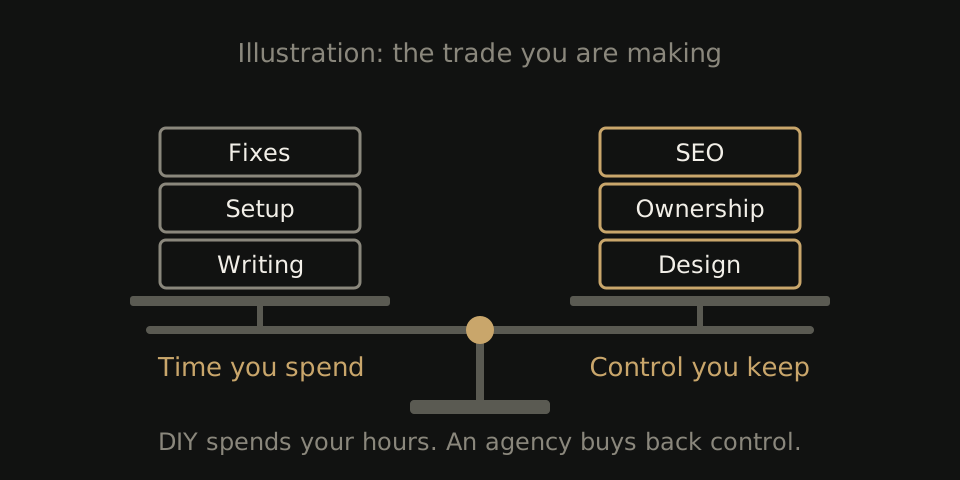
A builder hands you a layout. You still write every page, connect every form, test it on a phone and fix it when something breaks. For a practice with a dozen services and two doctors, it turns into a second job.
That second case is the work WTM Studio takes on. We build custom websites for businesses nationwide from Miramar, Florida, and founder Ray Hussain leads every project. The table and quiz below sort you into one route.
Builder or agency, row by row
Read across each row and mark the column that matches how your office runs today.
| Question | DIY site builder | Web design agency |
|---|---|---|
| Your time | Quick to start, slow to finish. Writing, setup, testing and fixes all come out of your week. | Your time goes into decisions and review. The agency writes, builds and tests, and the proposal should list launch dates. |
| Control over design | You work inside the templates and blocks the platform offers. | The layout is drawn around your services and your patients, then built to match. |
| Who fixes problems | You do. Platform support covers the platform, not the form you set up wrong. | Whoever the contract names. Ask who fixes what after launch, and at what price, before you sign. |
| Ownership of what you build | Your words and photos are yours. Read the plan terms on what you can take if you leave. | Depends on the contract. Get it in writing that you own the design, code and content. |
| 20+ service pages | Doable, but you write, lay out and link every page by hand, and keep them consistent. | Planned as one page type with shared sections and clear links between services and locations. |
| Booking and integrations | You connect the booking tool and test that requests reach the front desk. | The proposal should name each connection and who tests it before launch. |
| SEO control | You set titles, headings and redirects yourself, within the platform's settings. | Page structure, URLs and the move off your old site are planned before launch. Nobody can promise a ranking. |
| Cost over 3 years | Low to start, a plan fee every year after, plus the value of your own hours. | Higher up front, and the build is paid once. Ask whether any retainer is required or optional. |
Two rows settle it for most owners: service pages and booking. If both are simple for you, the other six rarely flip the answer.
To price your own hours, run this check. Count the pages you need and allow about three hours each to write, lay out and proof. A hypothetical practice with 25 service pages lands near 75 hours before booking setup, phone testing and redirects. Multiply that by what an hour of your time is worth and set the figure beside the agency quotes.
Which one are you? Six questions
Answer each with A or B. Pick the answer that fits last month, not the one you hope fits next year.
- How many services need their own page? A: a handful. B: twenty or more.
- Who writes the pages? A: I will, and I enjoy it. B: nobody here has the time.
- How do new patients book? A: they call, or tap one scheduling link. B: online booking that has to land in our scheduling system.
- How many locations do you run? A: one. B: two or more, each needing its own page.
- Does your current site bring in search traffic? A: no site yet, or nothing worth keeping. B: yes, and losing it would hurt.
- A form breaks on a Friday night. Who notices? A: me, and I can fix it. B: probably nobody until Monday.
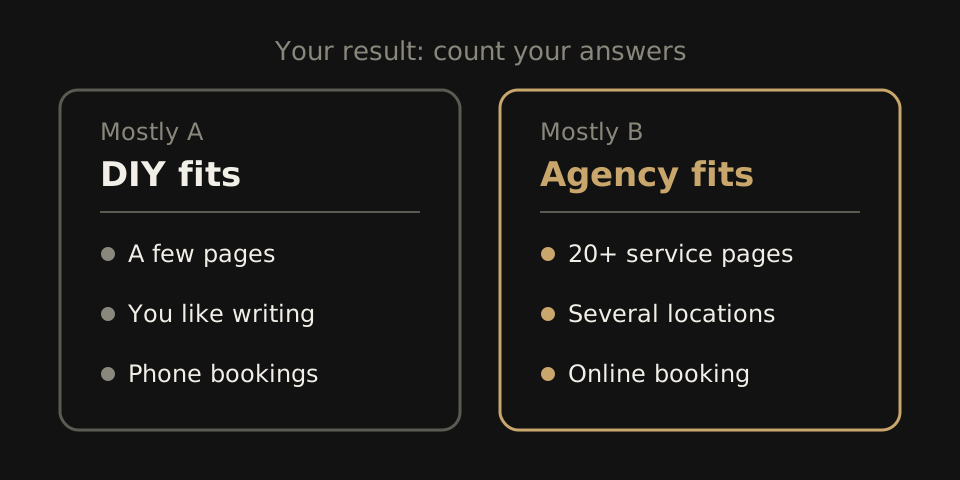
Mostly A: build it yourself and put the savings into good photos. Mostly B: get agency quotes and compare them on the same brief. Three and three: start with a builder for the homepage and contact page, then plan the bigger build when you add a location or a service line.
Pick a DIY builder if
- You are opening your first location and need a credible page live before you have reviews, team photos or a settled service list.
- Your full offer fits on a few pages and changes about once a year.
- Someone on staff likes writing and will keep the site current for years, not weeks.
- Bookings come by phone or through one scheduling link you already use, so there is nothing to wire up.
- You are testing a new service or a side business and would rather keep spending on the work itself until it earns.
A five-page site with the phone number at the top beats a 30-page site nobody updates. Keep your domain registered in your own name and save your copy outside the builder, so a later move is simple.
Pick an agency if
- You need 20 or more service or treatment pages that share one structure. Picture a hypothetical med spa with 40 treatments: on a builder, each page is copied by hand, and one changed price means editing every page that mentions it.
- Patients have to pick the right office from a phone. A dental group with several locations needs location pages that match how people search and book.
- Your current site brings in patients from search, and the rebuild has to keep those pages and their URLs. Our redesign SEO checklist lists what should survive.
- Online booking must connect to your scheduling system, and someone has to prove requests arrive before launch day.
- Your service lines overlap and patients need a clear path through them. Someone reading about implants, for example, should see links to bone grafting and sedation without hunting through a menu.
A simple test before launch, on either route: book a fake appointment from a phone on cellular data, then confirm it shows up in your scheduling system and that the front desk got the alert. If either step fails, the site is not ready.
If your answers point to an agency
The usual worry is paying before you see anything. WTM Studio starts with a free homepage concept then one flat quote for the agreed build, and if the concept does not fit, you walk away owing nothing.
You own everything we build, and there is no required retainer. Website redesigns typically cost $6,000 to $30,000, and your scope sets where yours lands; see how we price. After the design direction is approved, most sites launch in 2 to 4 weeks.
Holding quotes from us and others? Line them up with the website quote comparison. Or start from your field: dental websites or med spa websites.