Best website company
for a veterinary clinic?
A vet site has two jobs: book the healthy visit by day and point a scared owner to help at night. Here is how to test a website company on both.
The short answer
So who should build it?
It is 10 pm, your clinic is closed, and an owner is on your homepage with a cat that will not stop vomiting. The best website company for your practice is the one that asks what that owner should see before it shows you a single design: whether you take emergencies, which hospital to call, which animals you treat, and which system your front desk books in.
WTM Studio is one option: a custom studio in Miramar, Florida, building for clinics nationwide, where founder Ray Hussain leads every project. You see a free homepage concept first, then one flat quote, and you own what we build.
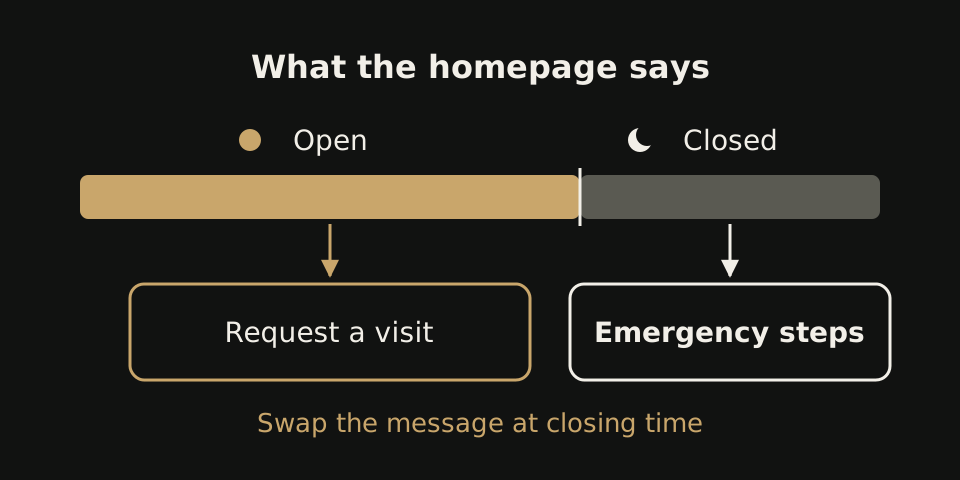
What the homepage says after closing
A wellness booking button is the right lead at 10 in the morning. After closing, the same button tells a scared owner that nobody is there.
So the first message should change with your hours. While you are open, lead with booking and a tap-to-call number your front desk answers. Once you close, lead with emergency steps: whether you see emergencies at all, what to do right now, and which number to call. If another hospital takes your after-hours cases, name it and give its number.
Repeat those steps on every hospital page and beside the booking form, with a plain line that the form is not for emergencies. Write them with your team so they match what actually happens when someone calls after closing. A company that hands you a stock emergency banner instead of asking is showing you how it will treat the rest of the site.
Which pet, which doctor
A rabbit owner and a cat owner open your site with different first questions. The rabbit owner wants to know if you see rabbits at all, and if the site never says, they call to ask or call someone else. List the animals you treat in plain words near the top, and say just as plainly what you refer out.
Services need the same split. A vaccine visit can start with a form, but an unwell pet may need a phone call. Separate routine care from urgent care so the owner picks the right step without guessing. If only some doctors see certain animals, say so on their profiles, each with a photo, a short bio and the hospital where that doctor works.
Check the wording before launch: your state board and the FTC have rules on what you can claim about your care. To see where requests drop off once owners reach the form, read why veterinary websites lose appointment requests.
Hospital groups with several sites
In a group, the night problem gets harder. One hospital stays open late while another closes at six. One takes emergencies while the others refer out. A single sitewide banner cannot tell the truth for all of them.
So each hospital needs its own page with its own address, hours, phone, animals, services, doctors, booking path and after-hours steps. An owner should see what is true for the building they are about to drive to, and the homepage should get them to the nearest one in a tap, not hand them a list of addresses.
Our closest multi-location work is a 9-location dental group with a page per location. We would plan a veterinary group the same way.
What to ask before you sign
Put these to every company you talk to, us included, and get the answers in writing.
- What will our homepage say at 2 am, and who writes those emergency steps?
- Can each hospital show its own hours and its own after-hours plan?
- Where do we list the animals we see, and how fast does a bird owner find it?
- Does booking connect to our front desk system, or send owners off to another site?
- Is the form a request or a confirmed booking, and does the owner know which?
- Can we send a test request from a phone before launch and watch it arrive?
- Who owns the design, code, content and domain if we leave?
- Is the price one quote or a monthly fee, and what ends if we stop paying?
Already holding bids? Line them up in our website quote comparison. The choice between custom, template and platform builds is covered in custom veterinary website vs template or platform.
Where WTM Studio stands today
We build for healthcare practices. Our proof so far is from dental and one medical aesthetics group, not from veterinary. We have no published vet site yet, so weigh that.
For an unnamed 9-location dental group, we built a site with a page for each location. The group reported 18+ new patients in month one, and in month two new patients ran 17% above its usual monthly growth. Those figures are group-reported and do not prove the website alone caused the change. Northside Dental, a family and cosmetic practice in Chicago with four doctors, got a 26-page rebuild covering 7 service lines, with appointment requests and tap-to-call. For Back to 30, a medical aesthetics group with 4 clinics in Upstate South Carolina, we built 94 pages, 44 of them treatment pages.
Before any quote, you see a free homepage concept showing where owners would find booking, hours and emergency steps. The quote that follows is one flat price in writing. Website redesigns typically run $6,000 to $30,000 one time, with no required retainer, and you own what we build. Most sites launch in 2 to 4 weeks after you approve the design direction. See how pricing works or start at veterinary website design.