Do I need a new website
or just a redesign?
Refresh the design when the pages and booking underneath still work. Rebuild when they don't. Either way, map every URL before launch so your rankings hold.
The short answer
Refresh the surface, or rebuild the structure
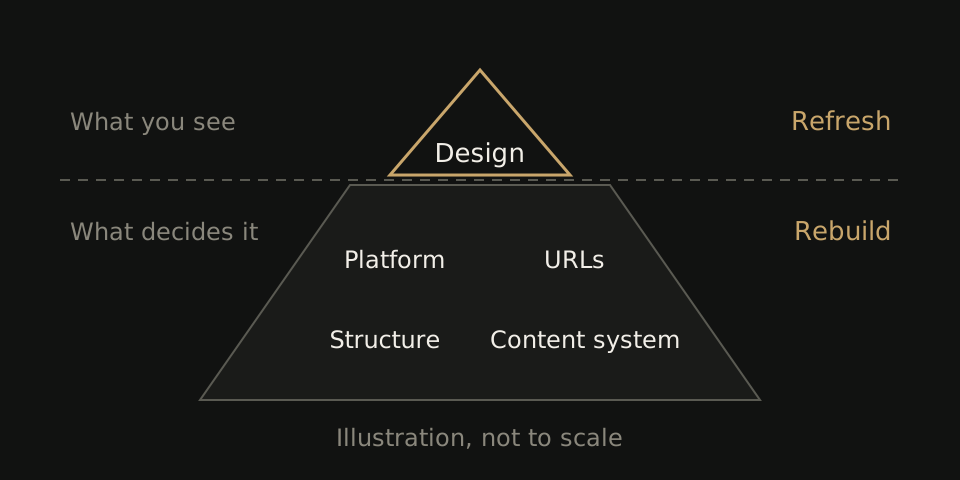
If your site looks fine but the phone doesn't ring, refresh it when the structure still works and rebuild it when the structure is broken. A refresh keeps your pages and URLs and changes what visitors see; a rebuild replaces the pages, the platform or both.
Structure means four things you can check today: a page for each service and each office, a book button that opens the right office's schedule, a platform your team can edit without a support ticket, and page addresses search engines already list. When all four work, new photos and a book button patients can find on a phone are often enough. When one is broken, a new look sits on top of the same problem.
WTM Studio is a custom studio that does both kinds of work, and we tell you which one you need before we quote. Website redesigns typically run $6,000 to $30,000 one time.
Find the break before you pick the fix
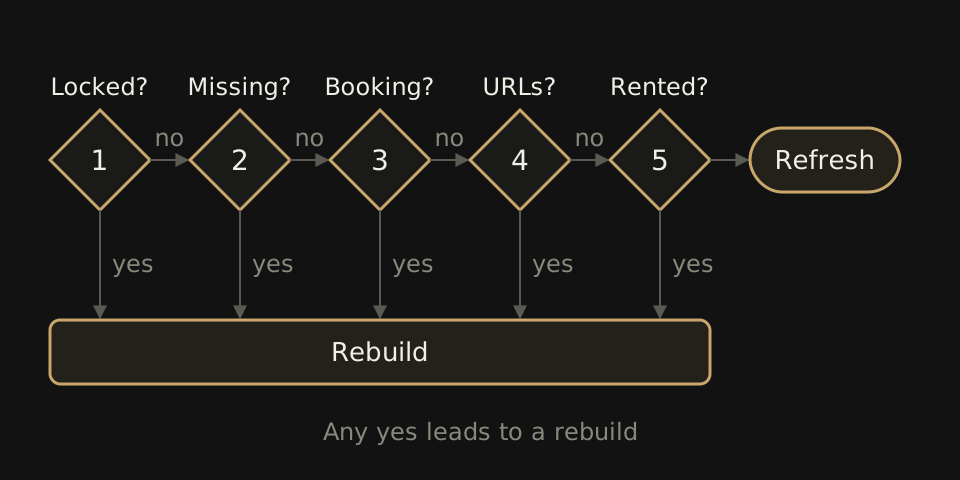
Start with the symptom, not the look. Open your site on a phone and try to book as a new patient would. Our checklist for a dental site that gets visits but no new patients walks through each step. Then answer these five in order.
Five questions that decide it
- Is the platform locked? If changing a phone number or adding a page takes a support ticket, the limit is the system, not the design.
- Are pages missing? One contact page listing every office, or one page trying to cover five treatments, cannot be fixed with new fonts. Each service and each office needs its own page.
- Does the book button miss the schedule? A button hidden below the fold is a refresh fix, so answer no. A button that opens a general form, or cannot reach each office's schedule, means the wiring has to change.
- Are the URLs a mess? Addresses full of ID numbers, or two pages for the same service, mean the page plan needs redoing. Clean addresses that already earn clicks are worth keeping.
- Is the site rented? If a monthly platform owns the template and you cannot move the site elsewhere, any redesign stays inside its limits.
One yes points to a rebuild. Five no answers mean the structure is sound and a refresh will do.
Two hypothetical practices, two answers
Picture two offices with the same complaint: plenty of visits, few calls. Practice A runs on a platform its staff can edit, has a page for each treatment, and its book button opens the online schedule. On a phone, though, that button sits below three paragraphs of welcome text and the photos are ten years old. All five answers are no, so a refresh fits: new photos, a shorter intro, the book button and insurance details moved to the top, and every URL left where it is.
Practice B lists two offices on one contact page, and its book button opens a general email form the front desk checks twice a day. That is a yes on questions 2 and 3. A new look would leave both offices without their own page and patients still waiting on a reply, so the fix is a page for each office and booking wired to each schedule. That is a rebuild.
Refresh versus rebuild, line by line
Each row is one part of the site and what each job does to it.
| A refresh | A rebuild |
|---|---|
| Content kept: nearly all of it, rewritten where patients drop off. | Content kept: the pages that earn clicks or answer questions patients ask; every other page is planned again. |
| URLs kept: every one, at the same address. | URLs kept: where practical, with each moved page sent to its matching replacement. |
| Platform change: none. Same system, same logins. | Platform change: often a new system, or the old one rebuilt from scratch. |
| Design change: new type, color, photos, button labels and layouts on the existing page types. | Design change: new page types built for each service, office or provider. |
| SEO risk: lower, as long as the headings and copy that earn clicks survive the rewrite. | SEO risk: real, and handled with a URL map plus redirects tested on the live site. |
| Fixes: a dated look, or a book button and insurance info buried below the fold. | Fixes: a locked platform, missing office pages, booking that cannot reach each schedule, or messy URLs. |
If the right column sounds like your site, a new template won't fix it. Our custom website or template guide covers that choice.
Hold on to your rankings through either job
Search engines rank pages, and pages live at addresses. Keep every address and change only the look, and most of the search risk goes away. Move addresses without a plan, and pages that earn clicks today can drop out of results.
- Record before you touch anything. Export a list of the pages that earn search clicks today, and write down the date range you pulled.
- Keep URLs where you can. A page that stays at the same address needs no redirect.
- Redirect each moved page to its match. Use a permanent 301 redirect from the old address to the page that replaced it. Sending every old page to the homepage leaves patients without the answer they clicked for.
- Test the live site, not the preview. Load the old addresses, see where they land, and send a marked test booking to confirm the front desk gets it.
A refresh usually leaves URLs alone. A rebuild almost always moves something. Our redesign SEO checklist covers the move step by step. No one can promise rankings stay the same, but a URL map prevents the losses you could have avoided.
Ask for the verdict before the price
A quote with no verdict is a guess. Before anyone prices the job, ask them to say refresh or rebuild, and to name which of the five questions drove that call. Then ask:
- Which pages stay, which move and which go?
- Does the platform change? If so, what can the current one not do?
- Who builds the redirect map, and who tests it on launch day?
- Who owns the finished site when the project ends?
Put the answers from two proposals side by side in our website quote comparison. A lower total that leaves out the URL map has just moved that cost to later.
Who builds it and what you own
At WTM Studio, founder Ray Hussain leads every project, and you hear refresh or rebuild, plus the question that decided it, before you see a price. You get a free homepage concept, then one flat quote. We're a service-area business based in Miramar, Florida, and we build sites nationwide, including dental website design, sites for dental groups and med spa website design.
There is no required retainer. Sites launch 2 to 4 weeks after the design direction is approved, and you own what we build. Prices and terms are on our pricing page.