Website for a dental group
with multiple locations
The front desk at location 6 needs to close at noon one Saturday. On a group site with one page per office, that is one field, changed by that office’s manager. This guide shows the page structure and who gets to edit what.
The short answer
One brand site. A page per office.
Build one brand website for the whole group and give every office its own location page. Treatment pages are written once and shared; each location page carries its own hours, phone, team, reviews and book button.
At location 6, the office manager changes that one Saturday in their office record, and the location page and its structured data update from that field. They cannot touch the implant page or location 2’s phone number. Someone still makes the matching change on the office’s Google Business Profile that day.
WTM Studio builds custom websites for dental groups nationwide from Miramar, Florida. Founder Ray Hussain leads every project, and you own what we build. Our DSO website design page covers how we plan group builds.
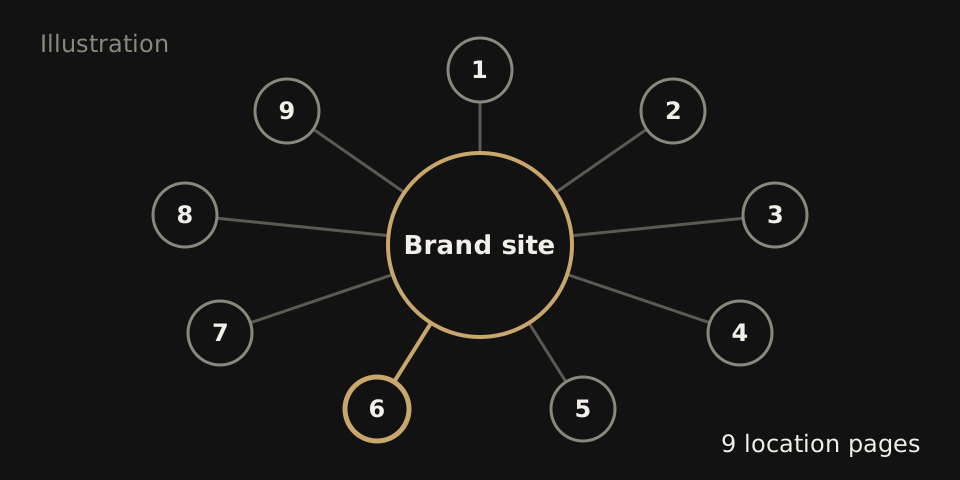
The three levels: brand, location, provider
The brand site is the hub. Each office is a spoke. Dentists sit one level further down, because some of them work at more than one office.
- Brand level (the hub)
- Homepage and location finder
- One page per treatment, written once
- Design, page templates and logo
- Privacy notices and other legal text
- Location level (one page per office)
- Office name as patients know it, plus the group name
- Address written exactly as it appears on Google
- Phone, hours and holiday closures
- A book button tied to that office’s schedule (see our booking guide)
- The treatments this office offers, linked to the shared pages
- Insurance notes, reviews, parking, directions and real photos
- Provider level (one profile per dentist)
- Real photo, name and role
- The offices where they see patients
The sorting rule: write each fact once, at the widest level where it is true. A crown is a crown at all nine offices, so the crown page sits at brand level. Saturday hours belong to one office. A dentist who works at locations 2 and 6 gets one profile, shown on both pages, not two copies that drift apart.
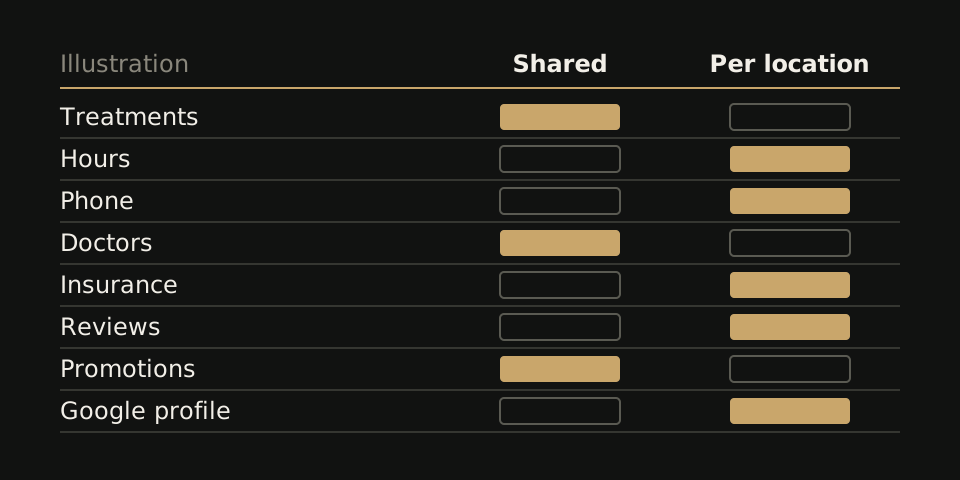
Google profiles for each location
Google’s Business Profile guidelines, checked October 17, 2026, set the rules for a chain:
- One profile per location. Only one profile per business or location is allowed. No second profile for one office, and no single profile covering three.
- Same name and category everywhere. Multi-location chains should use the same name and category at every location. Pick the fewest categories that describe the core business.
- A clean name. Use the name the business is known by in the real world. No keywords, taglines, phone numbers, URLs or hours in it, so “Emergency Dentist Open Sundays” does not go on the end.
- Real address, regular hours. Keep the address accurate. A virtual office or mailbox is not eligible. Hours must be regular, customer-facing hours.
- Dentists can have their own. An individual practitioner may have a profile if they are public-facing and reachable at the location, but not several profiles for different specializations.
Point each profile’s website link at that office’s location page, not the homepage. Keep name, address and phone identical on the page, in its structured data and on the profile. “Suite 200” in one place and “Ste 200” in another is the kind of gap to catch.
Who edits what
Give nine office managers full access and one of them will edit another office’s hours. Write the rules down before launch.
| Role | Edits | Does not edit | Review step |
|---|---|---|---|
| Brand team | Templates, design, treatment pages, legal text, group offers, new office pages | Office facts, without asking the office | Checks every office edit before it goes live. Updates Google profiles the same day an address, phone or hours change. |
| Office manager | Their own office’s hours, closures, team bios, photos and local notes like parking | Other offices, treatment pages, brand, group offers | Submits the change. The brand team confirms hours and phone still match the office record. |
| Doctor | Reviews their own profile and flags clinical errors on treatment pages | Publishes nothing directly | Approves their profile text. The brand team publishes it. |
So the Saturday change at location 6 takes two people: the office manager edits one field, and the brand team checks it and updates the Google profile. On a platform, ask the vendor to demo an office manager locked to their own office (more questions in our DSO platform vs custom guide).
What a 9-location group got
We built a new website, location pages and online booking for a dental group with 9 locations, with booking running through our Patient Growth System. The group reported 18+ new patients in month one, and in month two new patients ran 17% above the group’s usual monthly growth. The figures do not prove the website alone caused the increase, and they do not predict results for your group. We cannot share the group’s name, so the 9-location case study has no screenshots of the site.
Pricing a hub and spoke build
A quote for a group site should say how many location pages are included, what each extra one costs, which booking connections are in scope office by office, and who writes the location content. Line quotes up with our website quote comparison. Offices with their own sites need redirects planned first; see redesigning without losing SEO.
One test for any quote: ask what a tenth practice would cost to add. A clear answer prices one more location page and covers its redirects and Google profile link. “We would scope it then” means the per location cost is missing. Launch one location first, and a mistake shows up on one page, not nine.
WTM Studio website redesigns typically cost $6,000 to $30,000 as a one-time project. Projects start with a free homepage concept then one flat quote, with no required retainer. After the design direction is approved, most sites launch in 2 to 4 weeks. See pricing and terms or our dental website design service.